
DataviCloud vs Cognism: 2026 B2B Data & AI RevOps Comparison

DataviCloud vs. Cognism: The 2026 AI-Powered RevOps Intelligence Showdown
DataviCloud vs Cognism is no longer simply a comparison between two B2B data providers. In 2026, revenue teams are evaluating a much broader question: Should your go-to-market (GTM) stack simply provide data, or should it turn buyer intelligence into revenue actions?
Modern RevOps teams need more than lists of contacts. They need accurate B2B contact data, account intelligence, buyer intent signals, CRM enrichment, technographic data, firmographic data, AI-powered insights, and automated revenue workflows.
That shift is changing how companies evaluate sales intelligence platforms, B2B data providers, revenue intelligence software, and AI-powered RevOps platforms.
Cognism has built a strong position around sales intelligence, verified contact data, mobile numbers, intent signals, CRM enrichment, and compliance. DataviCloud approaches the problem from a broader AI-driven revenue orchestration perspective: combining data intelligence with AI analysis, enrichment, workflows, and revenue execution.
So which platform is better for your organization? DataviCloud or Cognism?
DataviCloud vs Cognism: Quick Comparison
Feature / Dimension | Cognism | DataviCloud |
Core category | Sales intelligence & B2B data | AI-powered revenue intelligence & orchestration |
Primary strength | Verified B2B contact and company data | Connecting buyer intelligence with revenue workflows |
Contact data | Verified emails and mobile numbers | Enrichment and contextual buyer intelligence |
Intent data | Buyer intent and account signals | Intent-driven AI analysis and workflow activation |
CRM enrichment | CRM enrichment capabilities | Data enrichment and intelligence workflows |
AI capabilities | AI-assisted data quality, insights & recommendations | AI-driven synthesis, analysis and automation |
Technographic data | Yes (Thousands of technologies) | Can be incorporated into broader account intelligence |
Firmographic data | Yes (Account & company metrics) | Account and company intelligence |
RevOps use case | Prospecting, enrichment and sales intelligence | Intelligence, orchestration and GTM automation |
Best for | Teams prioritizing high-quality prospect data | Teams looking to connect intelligence and execution |
Compliance focus | GDPR/CCPA and global compliance processes | Privacy-first data intelligence approach |
Ideal buyer | Sales, marketing and RevOps teams needing reliable data | RevOps and GTM leaders consolidating intelligence and execution |
1. What Is Cognism?
Cognism is a B2B sales intelligence platform designed to help revenue teams identify companies, find decision-makers, access contact information, enrich CRM records, and use buying signals for prospecting.
Cognism's platform includes sales intelligence, CRM enrichment, and Data-as-a-Service (DaaS) capabilities. Its positioning emphasizes verified mobile numbers (Diamond Data®), company and contact data, buyer intent signals, and European B2B data compliance.
Cognism is particularly relevant for teams looking for:
B2B contact databases & verified business emails
Phone-verified mobile numbers & sales prospecting data
Account intelligence & buyer intent data
European B2B data & compliance-focused prospecting
2. What Is DataviCloud?
DataviCloud is positioned around AI-powered GTM intelligence and revenue orchestration. Instead of treating B2B data as an endpoint, the broader objective is to connect data → intelligence → recommendations → action.
For RevOps teams, DataviCloud addresses key operational use cases:
B2B lead enrichment & account intelligence
AI-powered prospect research & intent signal analysis
Revenue workflow automation & GTM stack consolidation
AI-assisted account planning & personalized sales insights
The strategic difference is clear: Cognism helps revenue teams access and activate high-quality B2B data. DataviCloud aims to connect data intelligence with AI-driven revenue execution.
3. B2B Data Accuracy, Coverage, and Live-Sync Intelligence
Data quality remains one of the most critical factors when evaluating a B2B data provider. Outdated contact information creates failed sales outreach, poor email deliverability, incorrect CRM records, wasted SDR time, and lower sales productivity.
Cognism emphasizes verified B2B contact information, AI-assisted verification, human validation, and continuous updates. DataviCloud's differentiation focuses on contextual intelligence and actionability—answering not just "Do we have the prospect's phone number?", but "Why should we contact this account now, and what should the salesperson say?"
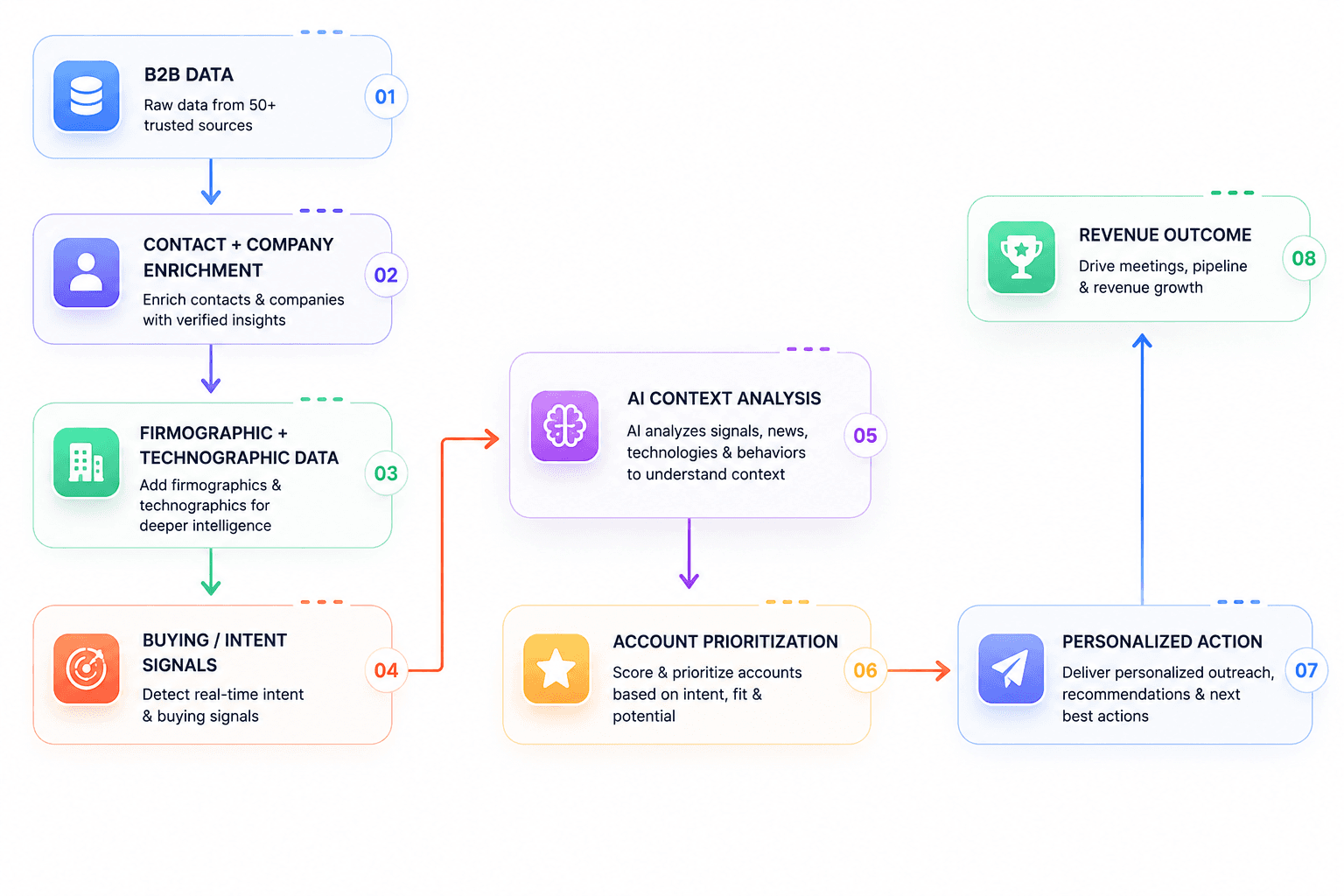
4. AI and Sales Intelligence: Precision Search vs. Prescriptive Orchestration
Traditional sales intelligence answers: "Who is the right prospect?"
Modern AI-powered sales intelligence answers: "Who is the right prospect, why now, what changed, and what should my team do next?"
Cognism uses AI throughout its data verification and search processes. DataviCloud positions AI further downstream into the execution layer through Agentic AI synthesis and workflow automation.
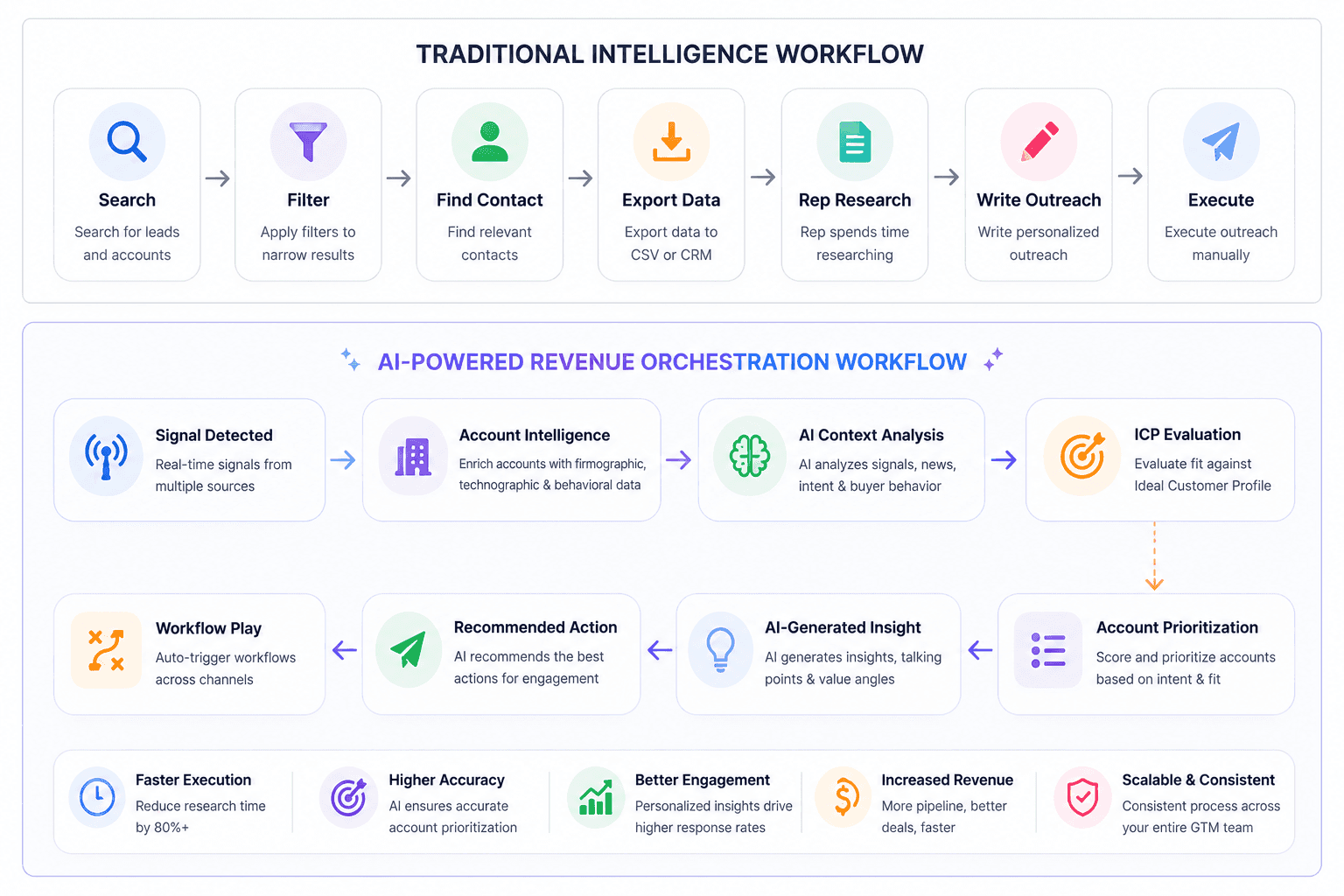
5. Buyer Intent Data Activation & Signal Processing
B2B buyer intent data helps revenue teams identify accounts actively researching a product or category. Cognism integrates intent topics (via Bombora) into its platform.
For RevOps teams, collecting an intent signal is only the first step. The real value comes from intent activation.
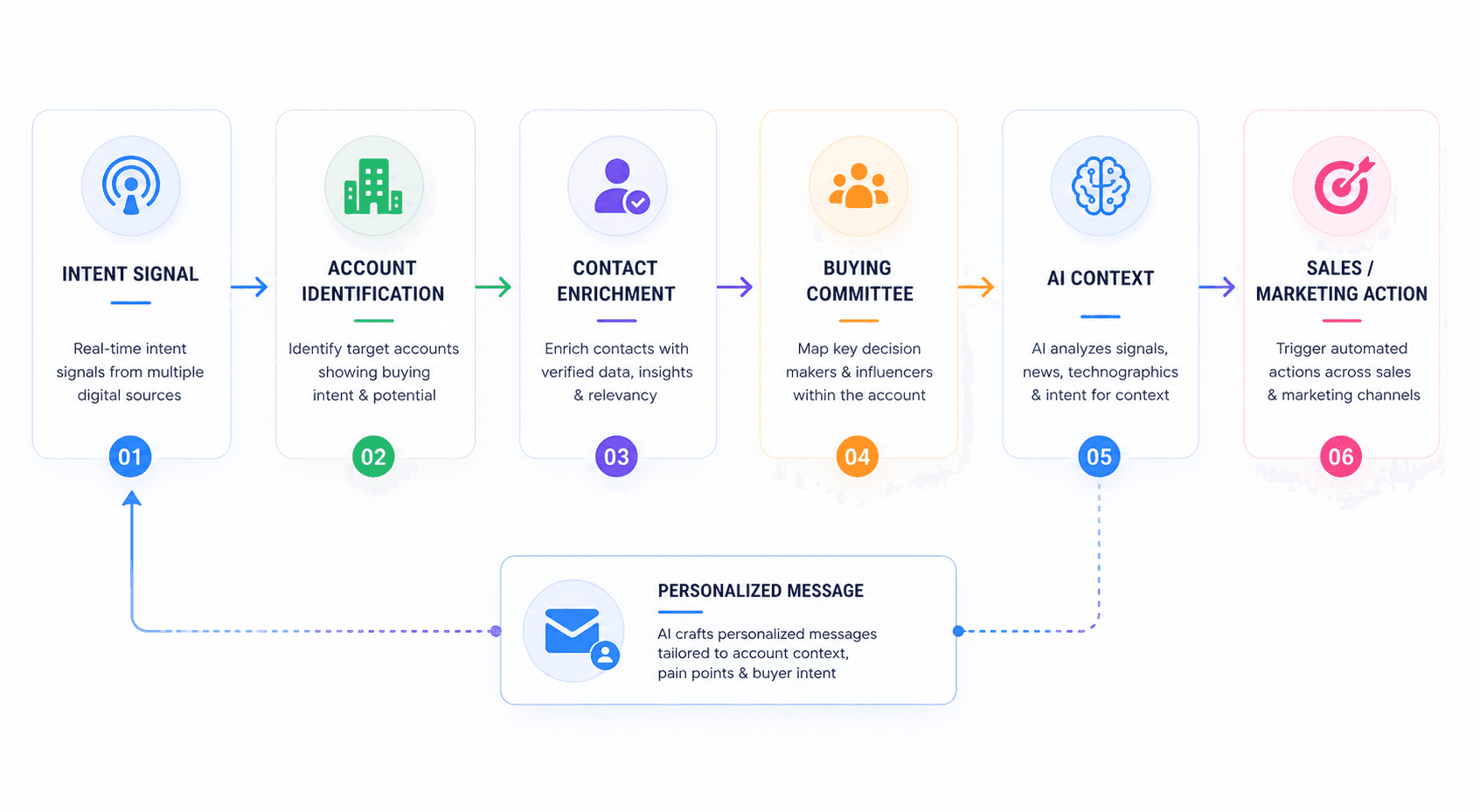
6. Architectural Deep-Dive: 3 Core GTM Capabilities
Real-Time Signal Activation vs. Static List Building
In 2026, static lead lists age rapidly. Signal-based GTM engines continuously evaluate real-time buyer behaviors (e.g., job changes, funding, tech installs) and auto-assign tasks to revenue reps immediately.
Generative Buyer Context & Prescriptive Outreach
Rather than forcing reps to spend 20 minutes manually researching accounts, AI synthesis engines combine historical deal wins and recent company announcements into ready-to-send personalized points-of-view (POVs).
GTM Tech Stack Consolidation & Tool Sprawl Reduction
Combining data sourcing, CRM enrichment, intent tracking, and workflow automation into one substrate significantly lowers SaaS overhead and eliminates data syncing friction.
7. Revenue Orchestration vs. Sales Intelligence
This represents the biggest architectural difference.
Sales Intelligence: Helps revenue teams understand who to contact, where they work, and how to reach them.
Revenue Orchestration: Connects that intelligence directly to downstream execution, eliminating software sprawl across data, intent, engagement, and reporting tools.
8. Compliance, Privacy, and Data Governance
Cognism publicly emphasizes GDPR and CCPA-aligned data practices, ISO 27001, SOC 2 Type II, and screening against global Do-Not-Call registries.
DataviCloud utilizes a privacy-first AI data architecture, using real-time verification and dynamic compliance masking to reduce static data retention liabilities.
9. Decision Framework & Final Verdict
Choose Cognism if:
Your primary need is high-quality B2B contact data and phone-verified mobile numbers.
European (EMEA/UK) data coverage and local DNC compliance are required.
You already maintain a mature sales engagement stack (e.g., LeanData, Salesforce).
Choose DataviCloud if:
You want to connect B2B data with AI-powered revenue intelligence and reduce GTM tool sprawl.
You want to transition from manual data collection toward automated revenue plays.
Your strategy centers on revenue orchestration rather than static data acquisition.
Final Verdict
Cognism helps revenue teams find the right buyers. DataviCloud aims to help revenue teams understand the opportunity and orchestrate what happens next. In 2026, competitive advantage is turning the right data into the right action at the right time.
Recent Post





FAQ
Comment Section