
ABM on a Shoestring

ABM on a Shoestring
A practical guide to running focused, multi-stakeholder ABM campaigns on a lean budget.
Are you a B2B SaaS company that’s suddenly realised your outreach isn’t really pulling its weight? Maybe you’ve had a spray-and-pray approach, marketing with the reckless abandon of B2C organizations. Or perhaps you have been talking to the right accounts, but haven’t been talking to the entire buying committee.
This is when most teams say: “We should do ABM.” Right after that comes the second thought: “But we don’t have the budget.”
The good news? You don’t need it.
Account Based Marketing in 2025
At its simplest, ABM is just this: pick the accounts that matter, understand the people inside them, and coordinate your outreach so they all hear a consistent story.
ABM is basically playing the long game. It is the slow-burn before a relationship. Your eventual goal is to sell to the account—but your immediate, intermediate, and even penultimate goals are to educate, engage, and woo the account.
When account-based marketing (ABM) became popular in the early 2010s, it was a luxury strategy. It was the preserve of companies with deep pockets who could afford big marketing teams and expensive tech stacks. After all, it did ask for a lot from the GTM team—personalized content for each account (and within the account, to individual stakeholders), custom landing pages, etc.
Cut to today: we have entered the era of lean or scrappy ABM, where you can run ABM without a big budget.
The shift has been driven by two things: more accessible intelligence (intent data, scraping tools, enrichment) and more scalable distribution. Today, with the right strategy, even lean teams can run multi-stakeholder campaigns that actually convert.
The Lean ABM Mindset
At its core, ABM is not about hi-tech, but about focus, coordination, and timing. The best ABM work just requires some good old-fashioned sleuthing, followed by some figurative wining-and-dining.
Traditional ABM often implies massive campaigns, dozens of tools, and infinite content variations. Lean ABM flips that on its head. It asks a few basic, but crucial questions:
Which accounts matter most right now?
Who are the 6–10 stakeholders we need to influence in each account?
What’s the simplest way to coordinate touches across those stakeholders?
The goal isn’t to build a full-stack ABM machine. It’s to identify the 20% of effort that drives 80% of the results.
STEP 1: Building Account-Level Orchestration
The first step in Lean ABM is account-level orchestration: knowing who matters and what matters to them.
An oft-quoted phrase in ABM circles is that a deal is made between six people, not two.
A typical B2B buying committee might include:
Decision-makers: C-level executives, VPs
Influencers: Managers, team leads
Gatekeepers: Procurement, admins
Target just one, and the deal might stall. Target all the right people at the right time, across the right channels, and suddenly you’re orchestrating engagement that moves accounts through the funnel faster than ever, without overspending.
Here’s how to make it work on a tight budget.
Start with your ICP: Pick your high-probability accounts.
Enrich your account data: At minimum, know each stakeholder’s role, title, and priorities. This ensures your outreach is relevant and reaches the right people.
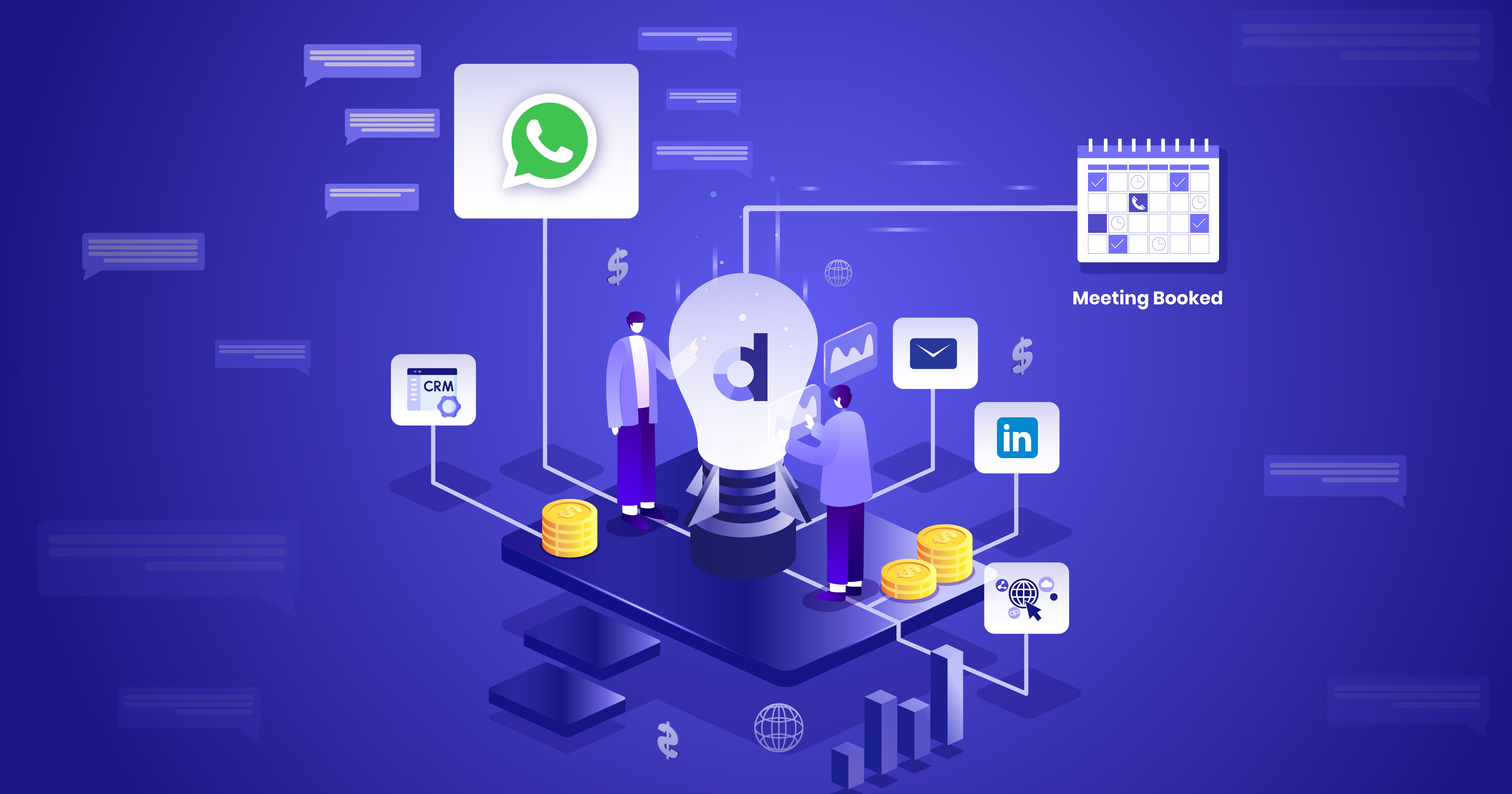
Map your multi-channel cadence: Email, LinkedIn, WhatsApp, and calls can all be orchestrated without expensive tools. A simple spreadsheet, CRM custom fields, or even a shared doc can handle this.
STEP 2: Multi-Channel Sequencing & Signal-Driven Prioritization
The next step is coordinating your outreach across channels and prioritizing accounts based on real engagement signals. Budget-conscious ABM campaigns rely on smart, coordinated use of existing channels:
Email: Even in 2025, email is still very much the workhorse of B2B outreach. For the best results, craft ultra-specific value propositions. Don’t just talk about benefits, show you truly understand the client. Dig into their business priorities, industry trends, and specific pain points. Ideally, your message should feel less like a pitch and more like a solution that’s going to deliver them from the problems that keep them up at night.
LinkedIn: Perfect for reinforcing email outreach with content that educates, engages, or builds credibility. To personalize your messages, leveraging data platforms and tools to research accounts (like their challenges, decision-makers, and recent company news) works wonders.
Calls or WhatsApp: WhatsApp is often overlooked, but its high engagement makes it ideal for reminders, updates, or conversational nudges, particularly for warm or hot accounts.
Each touchpoint should build on the last, guiding the account through awareness, interest, and decision. The message should feel like a conversation, not a barrage. Sequence your touchpoints thoughtfully. For example:
Email to the champion
LinkedIn nudge to an influencer
Follow-up call to a decision-maker
Content share to gatekeeper
Pro tip: Start by learning about your prospects so you can actually talk to them, not at them. Are they Gen X or millennials? Early adopters or laggards? What topics do they post about most? Which social media are they on? Then think about how to reach them. Will they pick up the phone, open an email, or respond on LinkedIn?
Signal-Driven Prioritization
Not every account or stakeholder deserves the same urgency. In ABM, timing is everything, and good timing is really hard! Lean ABM thrives on signals—simple behaviors that indicate interest and intent:
Pricing page visits
Trial activations or feature usage
Email opens or click-throughs
LinkedIn engagement or replies
When a stakeholder exhibits high-intent signals, escalate the account in your workflow. Warm accounts may receive nurturing content; hot accounts get direct outreach from an SDR or AE. The goal is to act fast on the accounts that show real buying behavior.
By combining multi-channel sequencing with signal-driven prioritization, lean ABM teams can execute account-level campaigns without a big budget, excessive tools, or endless content creation.
STEP 3: Measuring ABM Success
A big mindset shift in lean ABM is how you measure success. Instead of obsessing over individual metrics—like one contact opening one email—you’re looking at the health and momentum of the entire account.
1. Track engagement across stakeholders
In ABM, you’re not chasing one champion, you’re trying to win over an entire buying committee. So instead of tracking isolated actions, ask yourself:
How many people inside the account are actually engaging?
More engaged stakeholders usually means your message is resonating beyond a single curious contact.What kind of engagement are you seeing?
Email opens, clicks, LinkedIn interactions, poke-arounds on your pricing page, or even someone trying your product, all of these help you read the account’s temperature.Is your influence spreading?
The real win is when conversations start moving from one individual to multiple decision-makers.
2. Use a simple account score
You don’t need expensive ABM software to gauge interest. A lightweight scoring system works surprisingly well as long as you keep it consistent.
High-intent signals: Pricing-page visits, demo requests, competitive comparison pages
Mid-intent signals: Webinar attendance, resource downloads, repeat website visits
Low-intent signals: Likes, follows, basic site visits
Roll all of this up across everyone in the account. Once the score hits your threshold, that’s your cue: it’s time for an SDR or AE to step in with direct outreach. This prevents premature chasing while making sure warm accounts don’t sit idle.
3. Measure Account Progress
Engagement is great, but what you really want is forward motion. Track whether the account is actually moving through meaningful stages:
From initial outreach → to a conversation → to an opportunity → to a closed deal
Are more stakeholders showing up in calls or replying to threads?
Are blockers surfacing and getting resolved early enough?
These metrics keep your team focused on real movement—influence, engagement, buying-committee alignment, and pipeline progression—rather than vanity metrics that don’t translate into revenue. It’s a cleaner, clearer way to measure what actually matters.
What could go wrong?
ABM sounds simple on paper: focus on the right accounts, deliver the right messages, influence the right people. But in practice, even seasoned teams end up tripping over the same patterns. These missteps dilute the entire promise of ABM. Here are the traps to watch for.
1. Overfocusing on one champion
Relying on a single contact to drive a deal is risky. A deal often requires multiple stakeholders to be influenced: decision-makers, influencers, and gatekeepers. Lean ABM works only when you engage the right set of personas across the account.
2. Sending siloed or disconnected messages
Outreach that isn’t coordinated across channels or stakeholders feels random and can even hurt your credibility. Multi-stakeholder campaigns must tell a coherent story, where each touchpoint reinforces the last..
3. Ignoring signals
High-intent behaviors—pricing-page visits, demo requests, trial activations — are your guideposts. Ignoring them means missed opportunities.
4. Neglecting data quality
Even lightweight ABM collapses without clean, enriched data. Incorrect titles, missing emails, duplicates, or outdated account info lead to misfires and wasted effort. Invest in data hygiene, even if your budget is tight—it’s the difference between a coordinated campaign and random noise.
Datavicloud helps teams:
Even with a limited budget, Datavicloud turns your lean ABM efforts into an orchestrated, precision-driven machine. |
Ready to run lean, high-impact ABM?
Datavicloud gives you everything you need to execute multi-stakeholder, intent-driven campaigns efficiently and effectively.
Book a demo
Recent Post




FAQ
Comment Section