
The Signal-Based Outbound Playbook

The Signal-Based Outbound Playbook
The why, when, and how of reaching prospects at peak intent.
Remember the impossible docking scene in Nolan’s Interstellar? The spaceship Endurance is spinning out of control, losing orbit, and Cooper is outside in a tiny craft, with exactly one chance to match the Endurance’s violent spin and lock in. A fraction too early, he misses the ports. A fraction too late, he turns to stardust.
That scene would hit close to home for anyone in GTM today. Because, whether it’s intergalactic space or GTM outreach, timing is everything.
Maybe you already have a well-defined ICP, the perfect prospects, and a sharp, personalized email that ought to sweep them off their feet. There’s one more crucial step on the way to GTM glory—reaching out to the right prospects at the right time.
The Context
There was a time when untimed acts of outbound work pretty well. About a decade ago, B2B revenue was a numbers game. You’d pull in email lists by the thousands, blast out hundreds of messages, and close a decent handful of deals.
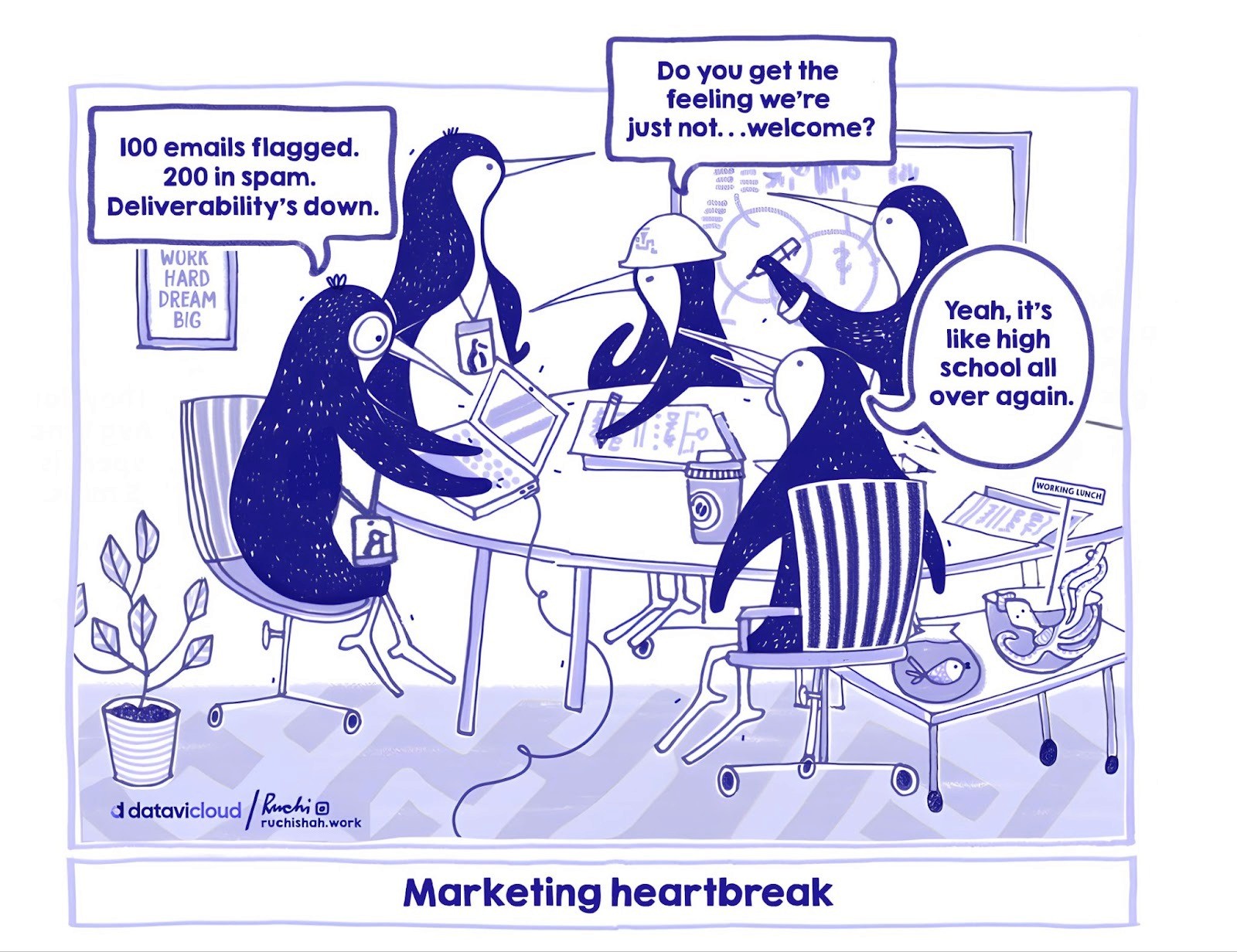
Post 2023, this philosophy has started to work against revenue teams. AI-driven outbound has flooded inboxes, leaving prospects jaded and unresponsive. Imagine opening your email at 9.00 am in the morning, to find the aftermath of a nightly battle of the brands. Dozens of automated pitches and AI-crafted cold emails—all eerily similar, all cheery and helpful (or unhelpful, as the case may be). Is it any wonder you want to switch tabs?
It’s not just the AI-driven email deluge that’s responsible for the gap between business and prospects. The real seismic shift happened when Google and Yahoo enforced stricter anti-spam policies in late 2023, putting conventional outbound methods under scrutiny. By early 2024, deliverability started to tank, leaving brands flailing to reach their prospects. Basically, standing out has never been this difficult.
So what’s the next play?
There’s an old sales adage that goes: Sell water to the thirsty. The 2020s version of that would be: Outreach when your prospect is at peak intent.
Email personalization is important, but no longer sufficient—and the same goes for ICP precision. The new competitive edge on the block is catching prospects at the exact moment they care.
As a sapient Redditor put it,

The Fix: Signal-based outbound
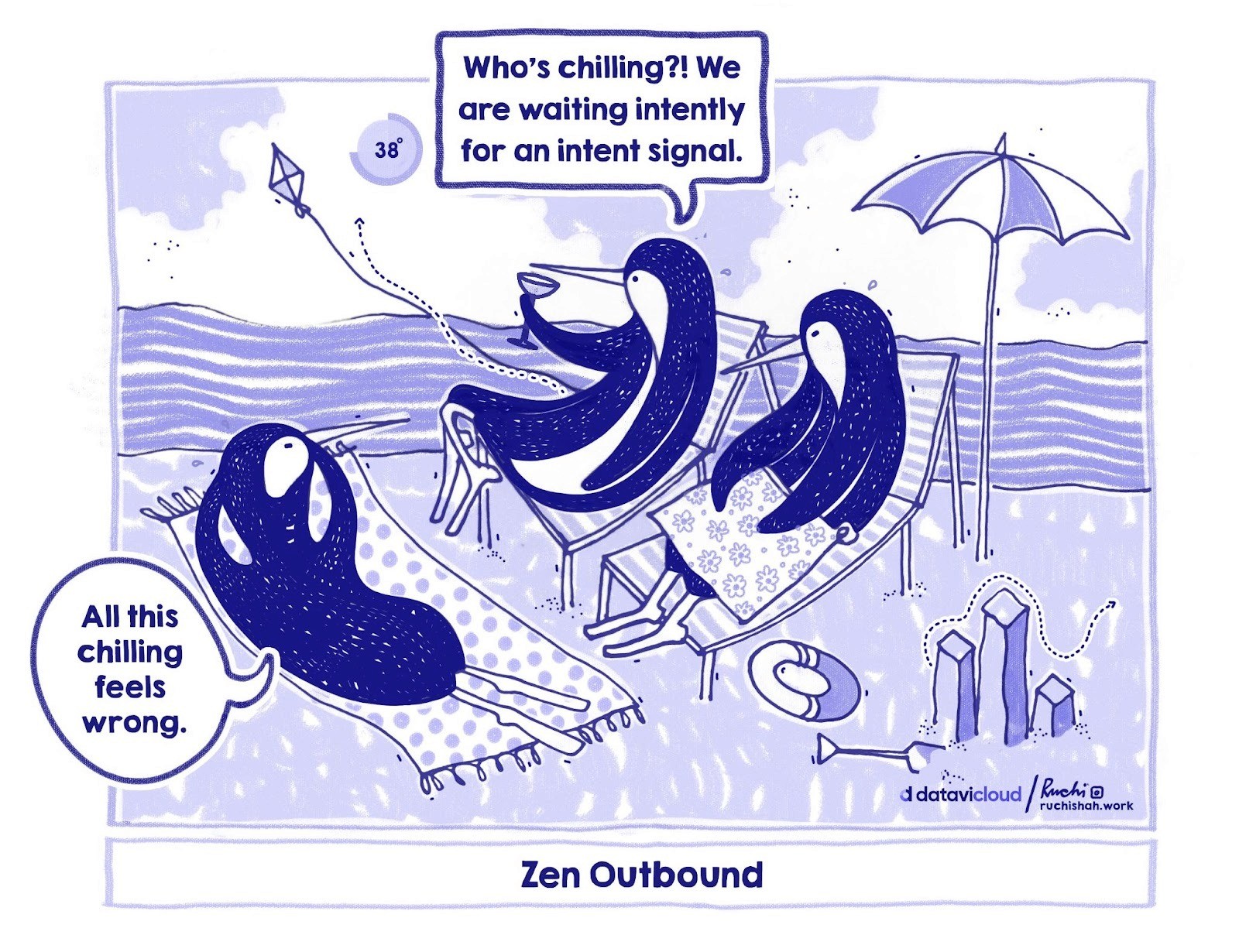
Welcome to the world of signal-based outbound—an approach where GTM teams engage prospects only when they demonstrate real behavioural signals. Think of it as your regular ICP-based outreach, turbocharged by timing.
Signal-based outbound will help your team:
Increase connect rates: When outreach aligns with an active spike in interest, prospects are far more likely to reply and continue the conversation—because you’re speaking to a need that already exists. Preaching to the near-converted, so to speak.
Prioritize the right accounts: A prospect downloading a whitepaper is not the same as a prospect visiting your pricing page. One is curiosity. The other is intent.
Shorten sales cycles: If you’re entering the conversation at the moment intent peaks, you bypass weeks of nurture and qualification. You’re meeting buyers when they are already evaluating options.
Capture in-market demand early: Signals could surface accounts entering a buying window before they show up on competitor radars, giving your team a head start. Of course, as signal-based outbound gets more democratized, you can expect competitors to stay abreast. For now, there’s still a first-mover advantage.
Dramatically reduce wasted outbound effort: Instead of burning thousands of touches on low-intent contacts, reps spend time only where there is evidence of real behaviour.
Why this leads to a better world (for the audience/buyers)
When outreach happens at the right moment and for the right reasons, the experience becomes noticeably better for buyers. Instead of being interrupted by generic sales messages, they’re approached with context and content that actually aligns with their priorities.
That’s what modern buyers want. They aren’t opposed to being sold to— they’re opposed to being sold to blindly. Outreach backed by sincere research feels less like a cold pitch and more like a well-timed nudge from a well-wisher.
We’ve seen this often at Datavicloud. Customers have told us how timely our outreach felt, almost uncanny in its alignment with what they were working on. That’s the result of cleaner data, stronger signals, and an intent-driven approach.
But there’s a precondition: these signals only work if your data is complete, enriched, and deduped. If your CRM has missing job titles, outdated emails, or duplicates, your triggers will fire on the wrong contacts, or not fire at all.
Signal based outbound: The fundamentals
How do you execute signal-based outbound? Let’s look at some of the basics.
How to set up buying-signal triggers
Which signals actually convert
How to implement plays based on signals
1. How to Set Up Buying-Signal Triggers
Signal-based outbound rests on three core building blocks. Think of them as the “intent stack” — each layer sharpening your ability to know when a prospect is actually ready to talk.
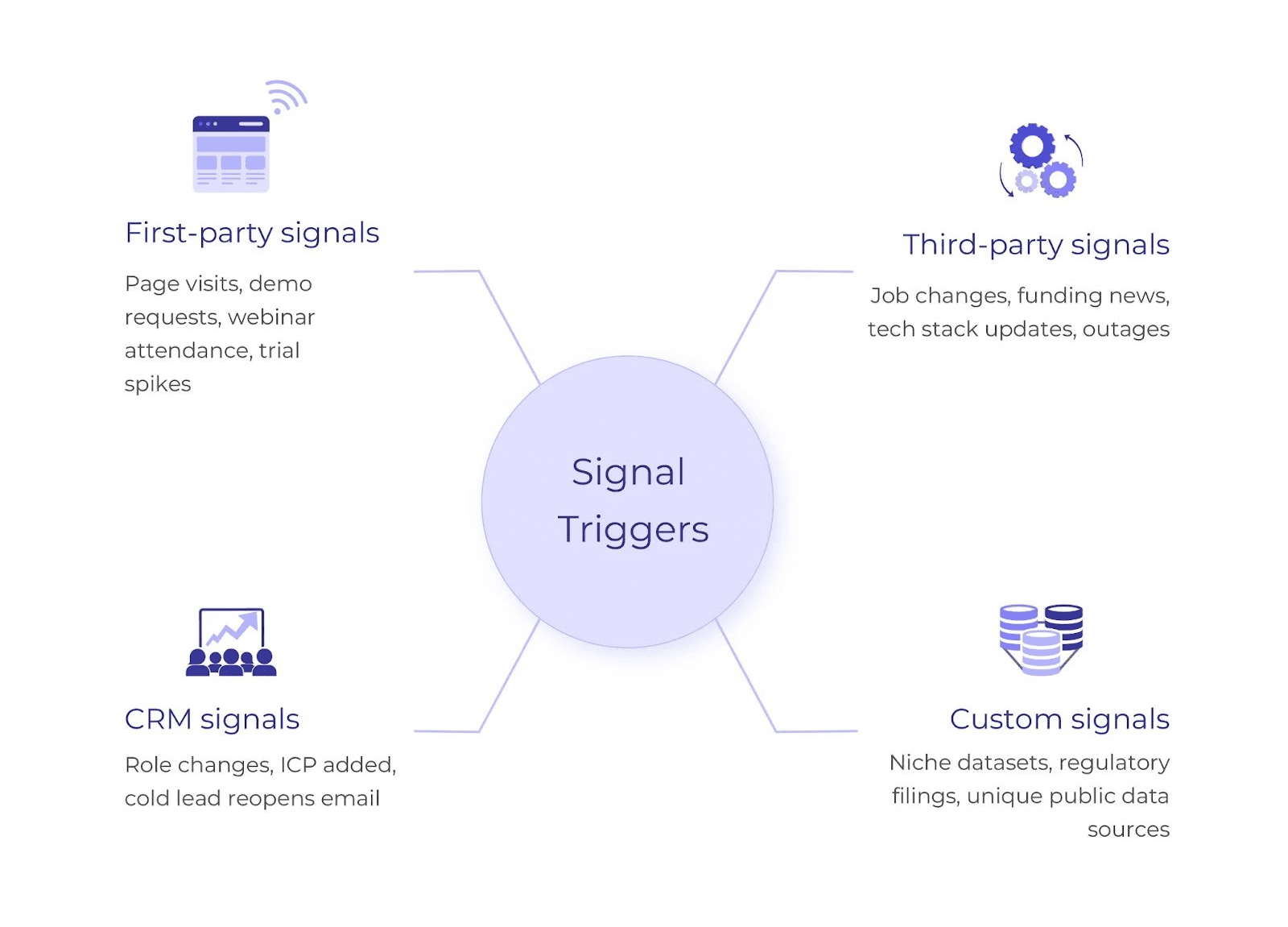
A. First-Party Signals (strongest intent indicators)
These are signals generated inside your own ecosystem—your website, product, and emails. They’re the closest thing you have to a prospect raising their hand, even if they don’t fill out a form. Typical high-intent triggers include:
Pricing or comparison page visits
Repeated email opens or clicks
Return website visits within a short window
Webinar attendance
Demo request drop-offs (started but didn’t finish)
Free trial activation or usage spikes
These are your most reliable signals because the behaviour is explicit, observable, and tied directly to real interest.
B. Third-Party Signals (broad market intelligence)
While first-party signals tell you who's already looking at you, third-party signals reveal who’s entering a buying cycle in the market. These help you expand well beyond the people already in your funnel:
Job changes or promotions
Company hiring surges
Funding announcements
Tech stack changes
Review-site activity (G2, Capiche, Reddit, etc.)
Competitor outages or price increases
These triggers don’t guarantee they’re evaluating you, but they strongly suggest a company or buyer entering a new buying window.
C. CRM + Enrichment Signals (your hidden pipeline goldmine)
These are the internal signals, the ones sitting quietly in your CRM. These are often the highest-intent triggers if your data is enriched and clean enough to detect them:
A known contact switches jobs (one of the highest reply-rate triggers)
An ICP-fit contact gets added to a target account
A previously cold lead reopens an old email
Missing lead fields (email/phone/title) get enriched
An account moves from “Unknown Fit” → “ICP Fit” after enrichment
The thing is, these signals don’t exist without proper enrichment. Most CRMs have 40–70% data gaps, which means these triggers simply never fire — and the highest-intent moments vanish in the dark.
Special mention: Custom signals
Custom signals cut across all signal types and add depth to your outbound strategy.
Soon enough, every brand will have similar tools, data, and workflows. So who wins? Your edge is anything that others can’t copy easily: custom signals built from public datasets, niche reporting, regulatory filings & first-party data.
For example:
Hospitals whose patient-satisfaction scores drop below a certain threshold
Construction companies that recently won (or lost) major contracts
Manufacturers issuing recent safety recalls or product defect notices
Logistics firms expanding warehouse capacity or opening new distribution centers
Schools or universities with recent changes in accreditation status
Financial services firms reporting significant staff turnover in key departments
Why custom signals matter: Custom signals can surface high-intent opportunities that standard first- or third-party signals might miss. By tracking these niche, hard-to-replicate signals, GTM teams can gain a distinctive first-mover advantage, reaching prospects when others don’t even know a window exists.
2. Which Signals Actually Convert ?
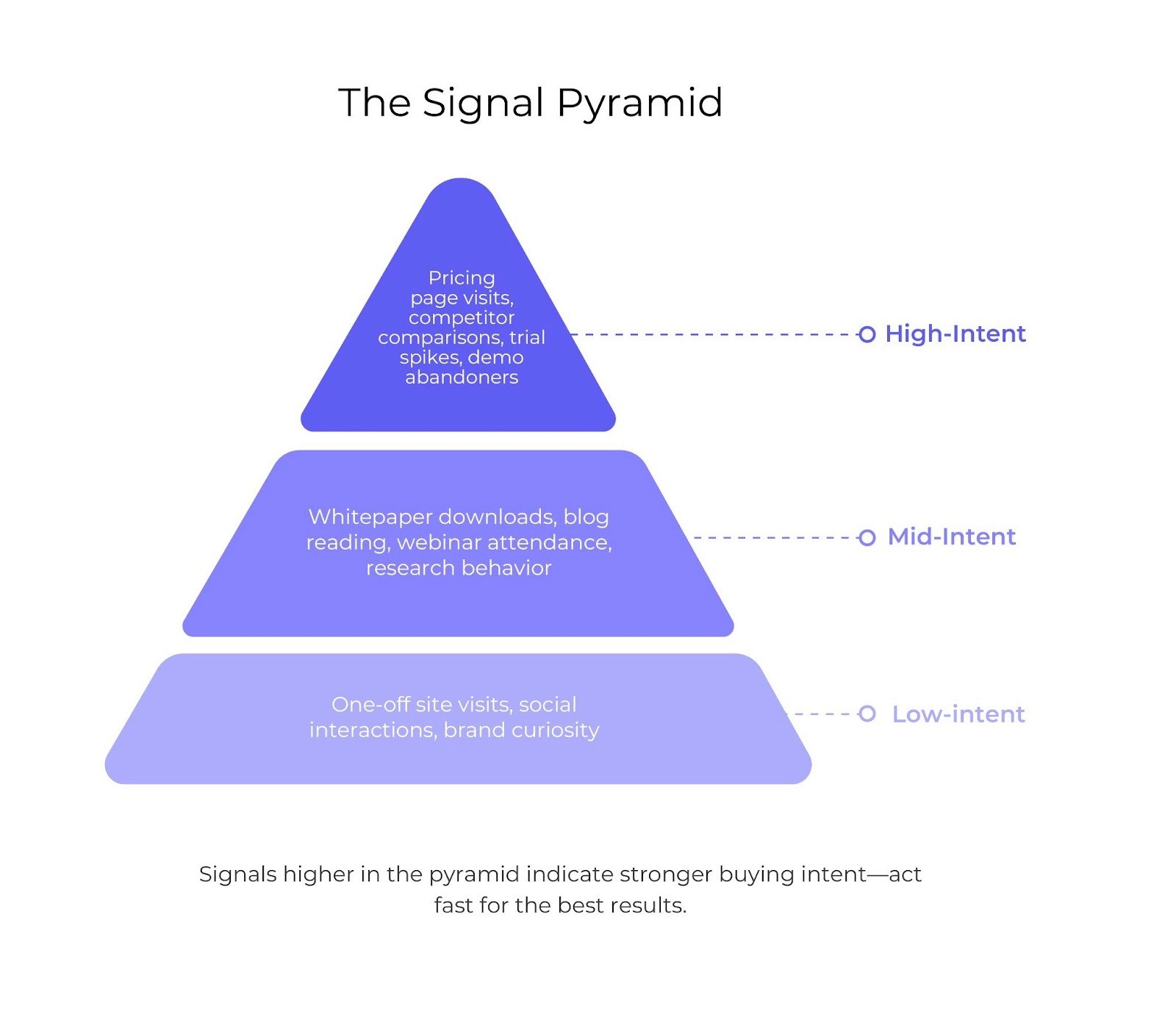
Not every signal deserves the same level of urgency. Here’s how they stack up in terms of real conversion potential:
High-Conversion Signals (Bottom-Funnel Intent)
These signals are pretty much quietly telling you that your prospects are ready. For example, pricing page visits often have a 2–3x higher conversion than generic leads. Other signals are competitor comparison page views, free trial usage spikes, repeated CTA clicks, and demo-page abandoners.
Mid-Intent Signals (Research Stage)
These signals are still strong indicators of interest—but they need nurturing, not pressure: whitepaper/eBook downloads, blog consumption patterns, webinar attendance, on-site research-heavy behaviour.
These perform best with a value-first, advisory-style sequence.
Low-Intent Signals (Awareness Stage)
Good for long-term nurture tracks, but not for immediate outbound: random website visits, social media interactions, general brand curiosity.
These should only escalate when paired with stronger intent behaviour.
3. How to implement GTM plays based on signals
Capturing buying signals is only half the job. The real bottleneck is operationalization. Without the right follow-up processes, high-intent signals can simply sit idle.
A functional signal-based outbound engine needs five things:
1. Event tracking across your product and website
Log every meaningful action: high-intent pages, feature usage, return visits, drop-offs. Without clean events, you’re operating blind.
2. A signal-to-workflow map inside your CRM (HubSpot/Salesforce)
Each signal should trigger something specific:
• a task for an SDR
• an automated nurture
• an account-level alert
• or a routing event
If there’s no workflow mapped, it’s not a signal, it’s just noise.
3. Enrichment rules that prevent false signals
Incomplete firmographics, missing job titles, unverified emails—all of these cause misfires. Enrichment must run before the trigger fires, not after.
4. Lead-routing logic that reflects intent tiers
High-intent signals (demo drop-offs, repeat pricing-page visits) should route straight to humans. Mid- and low-intent signals (hiring surges, funding, new ICP match) can flow through automated sequences.
5. SDR/AE workflows aligned to signal priority
Every priority tier needs a recommended next action: call, email, bump, or add to sequence. Without process alignment, signals get ignored or treated the same, defeating the whole point.
When all five pieces are orchestrated well, your reps can rely on the system and only reach out when there’s evidence a prospect is ready to engage.
When signal-based outbound fails
The theory behind signal-based outbound is solid, but here’s where the practice may fail: you can’t run an intent-driven GTM engine on bad data. Here’s what can happen when your data is wonky.
Signals don’t fire because key fields (title, industry, phone, company size) are missing or outdated.
False positives appear when duplicate contacts create misleading activity trails.
High-intent prospects get ignored because they’re logged under the wrong account or marked with the wrong lifecycle stage.
Suboptimal signal-based outbound isn’t just a workflow problem. It’s a data quality problem. This is why products such as Datavicloud’s LEO (lead enrichment and optimization) matter: they ensure every signal fires on accurate, enriched, structured, deduped data, transforming a theoretical strategy into a predictable revenue system.
Parting thoughts
Signal-based outbound is a necessary, inevitable shift in how revenue teams think. When your signals are reliable, you can unlock an outsized share of pipeline and revenue.
In a way, it has also brought courtesy back to selling. It is inherently more respectful to contact buyers only when there is evidence of interest. It’s definitely a more promising start to a long-term relationship!
Ready to engage with your leads differently? LEO by Datavicloud brings together everything you need to execute signal-based outbound—lead enrichment based on ICP-scoring and win-loss analysis, intent-based multichannel outbound, and inbox-first deliverability best practices—in one seamless, user-friendly platform.
Recent Post





FAQ
Comment Section